+41 71 658 70 10
info@polygal.ch
Mon. - Fri.: 07:30 - 17:00
Switzerland
LinkedIn Profile
HOME
>
MATERIALS
>

Rice starch

Rice starch is the main carbohydrate component of rice grains, consisting of tiny, insoluble granules made up of the polymers amylose and amylopectin. It is obtained by separating the starch fraction from rice flour and is widely used as a functional ingredient in Personal Care and Cosmetics applications. Polygal uses 100% European rice starch sources, ensuring consistent quality, traceability, and compliance with cosmetic regulations. In contrast to rice flour, cosmetic-grade rice starch contains little to no protein, making it particularly suitable for sensitive skin, baby care, and hypoallergenic formulations.
Dashboard mockup

Composition & structure

Rice starch belongs to the family of native cereal starches and shares the same basic building blocks as other starches, but with some unique structural features:
Polymers:
Amylose – mostly linear chains of α-D-(1,4) linked glucose units
Amylopectin – highly branched polymer with α-D-(1,4) and α-D-(1,6) linkages
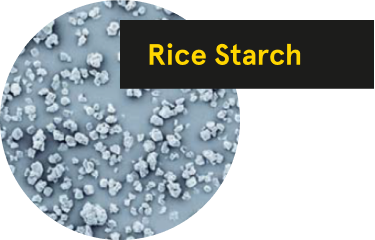
Granule size: approx. 2–10 μm
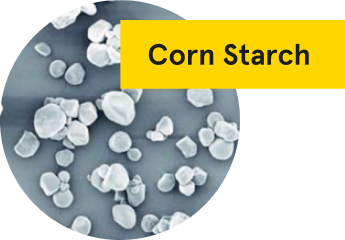
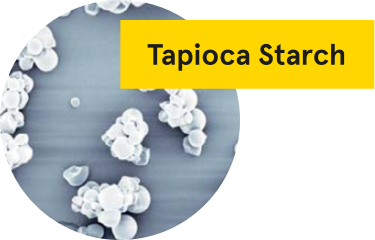
significantly smaller than corn, potato or tapioca starch
contributes to a smooth, silky, non-gritty sensory profile on the skin instantly
Compound granules
many tiny granules form one amyloplast, improving adhesion and powder distribution
High whiteness & low protein content
ideal for colour cosmetics, baby powders, deodorant powders and dry shampoos
These structural characteristics give rice starch a soft, creamy gel, neutral sensory profile, and excellent whiteness, which are highly valued in baby food, dairy, confectionery, and cosmetic powders.
Dashboard mockup

How rice starch is produced

Commercial rice starch is produced by separating starch from the rest of the rice kernel (proteins, lipids, fibre), typically via wet processing:
1
Steeping/soaking of milled or broken rice in a dilute alkaline solution (e.g. NaOH) to soften the kernels and solubilise proteins.
2
Grinding the softened rice to a slurry and removing cell wall fragments by screening.
3
Starch–protein separation by allowing starch to settle, then removing the protein-rich supernatant.
4
Washing and decanting to remove residual soluble material and alkali.
5
Dewatering and drying (filtering / centrifuging, then oven or drum drying) to obtain a low-moisture starch “cake” that is finally ground and sieved to the desired particle size distribution.
Polygal’s approach
Rice starch is purchased from selected European raw material suppliers, then gently blended and refined at our Swiss headquarters. This refinement step is tailored for cosmetic and personal care applications, preparing the starch for use in dry shampoos, make-up, and other personal care formulations.

Technology

Very fine
particle size (≈2–8 μm)

soft, silky touch
excellent spreadability
smooth, matte finish
minimal residue on hair and skin

High
whiteness

natural opacifying effect
brightening in powders and emulsions
ideal for talc replacement

Neutral
odour & taste

no off-notes in
leave-on products
compatible with fragrances

Hypoallergenic
profile

extremely low protein content
suitable for baby care and sensitive skin

Oil & moisture
absorption

controls sebum
supports mattifying products
improves dry shampoo and deodorant performance
Property
Granule size
Colour
Skin feel
Allergen profile
Cosmetic performance
Rice starch
2–8 μm (very fine)
Very white
Soft, silky, non-gritty
Hypoallergenic
Excellent mattifying & sensory profile
Corn starch
15–25 μm
Yellowish
Firmer feel
Contains residual proteins
Less smooth
Tapioca starch
20–35 μm
Greyish
Slightly sticky
May feel tacky
Smooth but sticky
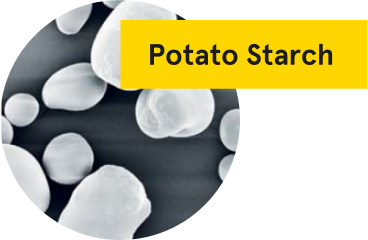
Potato starch
15–80 μm
White
Sticky
Can leave residue
Powdery, can drag

Application of Rice Starch for Personal Care

While many people know and use rice starch primarily in the food industry, Polygal focuses on producing high-purity rice starch specifically for the cosmetics and personal care sector.
Rice starch has a long history as a cosmetic dusting powder, especially in face powders, because:
Very fine particles adhere gently to the skin
Provide a soft, matte finish
Offer good oil absorption
They are perceived as natural and gentle, even for sensitive and baby skin.
Modern personal care uses include:
Face & body powders
Mattifying foundations and primers
Baby powders and soothing powders
Dry shampoos
Deodorant and antiperspirant powders

Polygal’s personal care rice starches

At Polygal, we transform high-quality rice starch into tailor-made grades for personal care and cosmetics, processing and refining them at our Swiss headquarters for consistent performance and regulatory compliance.
Polycos Soft Touch
Composition:
Physically modified rice (Oryza Sativa) starch
View product
Polycos RS
Composition:
Physically modified rice (Oryza Sativa) starch
View product
Polycos RS-UF
Composition:
Physically modified rice (Oryza Sativa) starch and Cetrimoniumchloride
View product
CHECK OTHER MATERIALS WE USE

Natural by conviction

Guar

Guar pods are the fruit of an annual, bush-like plant whose growth depends on the annual monsoon rain.

Carob Bean

Carrot bean pods are the fruits of the carob tree, which is native to the Mediterranean region.

Tara

Tara pods are the fruit of the tara tree, which is native mainly to the Peruvian Andes.